The Bauman Moscow State Technical University Centre for Professional and Continuing Education offers a wide range of professional educational programmes that empower you
to master new skills and open up new career opportunities
in high-demand fields
Competitive advantages:
Educational programs
Unmanned Aerial Vehicle
Register
UAV Production
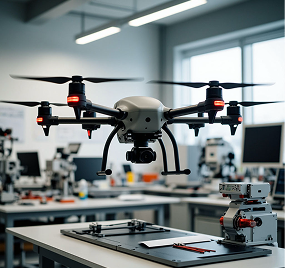
The program provides comprehensive knowledge of the entire lifecycle of unmanned systems: from design and production to safe operation. Participants will delve into the fundamentals of UAV design, study modern architectural solutions, and acquire practical skills for organizing their own high-tech production.
Target group:
Engineers and technical specialists seeking to master a new field;
Employees of companies engaged in the maintenance and repair of unmanned aircraft;
Students and graduates in the fields of aviation, mechanical engineering, instrumentation, and robotics.
Competencies:
UAV development, production and operation;
Select, design and manufacture of various architectures;
Organization workshop for UAV production in accordance with safety regulations.
The program provides comprehensive knowledge of the entire lifecycle of unmanned systems: from design and production to safe operation. Participants will delve into the fundamentals of UAV design, study modern architectural solutions, and acquire practical skills for organizing their own high-tech production.
Target group:
Engineers and technical specialists seeking to master a new field;
Employees of companies engaged in the maintenance and repair of unmanned aircraft;
Students and graduates in the fields of aviation, mechanical engineering, instrumentation, and robotics.
Competencies:
UAV development, production and operation;
Select, design and manufacture of various architectures;
Organization workshop for UAV production in accordance with safety regulations.
Credits: 4 ECTS
Register
Ballistics of Rockets and Spacecraft
Register
Ballistics of Rockets and Spacecraft
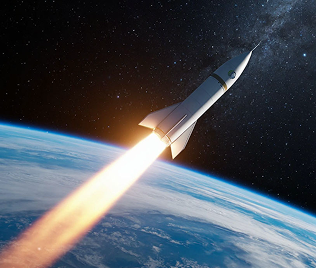
The program provides systematic knowledge of the theory and practice of calculating orbital motion, including the analysis of both unperturbed and perturbed flight, as well as the planning of orbital maneuvers.
Target group:
Engineers and technical specialists seeking to master a new field;
Students and graduates in the fields of aerospace engineering, astronautics, and dynamics.
Competencies:
Application of primary coordinate systems and orbital elements to characterize the spacecraft motion;
Description and calculation of parameters for interorbital maneuvers required for spacecraft operations;
Accounting for the influence of major natural perturbations in spacecraft motion analysis.
The program provides systematic knowledge of the theory and practice of calculating orbital motion, including the analysis of both unperturbed and perturbed flight, as well as the planning of orbital maneuvers.
Target group:
Engineers and technical specialists seeking to master a new field;
Students and graduates in the fields of aerospace engineering, astronautics, and dynamics.
Competencies:
Application of primary coordinate systems and orbital elements to characterize the spacecraft motion;
Description and calculation of parameters for interorbital maneuvers required for spacecraft operations;
Accounting for the influence of major natural perturbations in spacecraft motion analysis.
Credits: 1 ECTS
Register
Dynamics of Space and Re-entry Vehicles
Register
Dynamics of Space and Re-entry Vehicles
This course provides an in-depth study of the principles of numerical simulation and flight dynamics of re-entry vehicles within a planetary atmosphere. The program emphasizes the complex physical processes and mathematical models required for the accurate description and calculation of trajectories, stability, and controllability of vehicles during the descent phase.
Target group:
Engineers and technical specialists seeking to master a new field;
Students and graduates in the fields of aerospace engineering, astronautics, and dynamics.
Competencies:
Understanding the fundamental characteristics of descent vehicle motion;
Formulating and applying systems of differential equations to describe descent vehicle dynamics;
Analyzing the motion of an axisymmetric vehicle with various asymmetries and assessing their impact on trajectory and stability.
This course provides an in-depth study of the principles of numerical simulation and flight dynamics of re-entry vehicles within a planetary atmosphere. The program emphasizes the complex physical processes and mathematical models required for the accurate description and calculation of trajectories, stability, and controllability of vehicles during the descent phase.
Target group:
Engineers and technical specialists seeking to master a new field;
Students and graduates in the fields of aerospace engineering, astronautics, and dynamics.
Competencies:
Understanding the fundamental characteristics of descent vehicle motion;
Formulating and applying systems of differential equations to describe descent vehicle dynamics;
Analyzing the motion of an axisymmetric vehicle with various asymmetries and assessing their impact on trajectory and stability.
Credits: 1 ECTS
Register
New generation materials: Introduction to Composites
Register
New generation materials: Introduction to Composites
This course serves as an introduction to the world of new-generation composite materials. Participants will gain comprehensive knowledge of the composition, properties, advanced manufacturing technologies, and practical application of composites.
Competencies:
Identifying suitable composite materials for specific applications;
Selecting and modifying matrix and reinforcing components in composite materials;
Selecting the optimal technology for manufacturing structures from composite materials.
This course serves as an introduction to the world of new-generation composite materials. Participants will gain comprehensive knowledge of the composition, properties, advanced manufacturing technologies, and practical application of composites.
Competencies:
Identifying suitable composite materials for specific applications;
Selecting and modifying matrix and reinforcing components in composite materials;
Selecting the optimal technology for manufacturing structures from composite materials.
Credits: 1 ECTS
Register
Digital design of structures made of new and composite materials
Register
Digital design of structures made of new and composite materials
The course provides a comprehensive understanding of modern Digital Design and Production technologies (CALS), with a specific focus on the practical application of both Russian and international software solutions. The program covers the entire digital thread—from initial design and engineering analysis using finite element methods to digitalizing document flow and manufacturing processes management.
Competencies:
Applying modern CAD systems (Russian and international);
Implementing PDM systems for digital document management;
Utilizing specialized FEA software for composite structures;
Designing production systems using advanced CAM technologies.
The course provides a comprehensive understanding of modern Digital Design and Production technologies (CALS), with a specific focus on the practical application of both Russian and international software solutions. The program covers the entire digital thread—from initial design and engineering analysis using finite element methods to digitalizing document flow and manufacturing processes management.
Competencies:
Applying modern CAD systems (Russian and international);
Implementing PDM systems for digital document management;
Utilizing specialized FEA software for composite structures;
Designing production systems using advanced CAM technologies.
Credits: 2 ECTS
Register
Data Science
Register
Data Science
This intensive program provides comprehensive training in Data Science, from data extraction and analysis to building and deploying Machine Learning models. The curriculum is designed to equip you with the full set of skills required for a successful career in the field.
Target group:
IT and data project managers seeking to understand how to apply data science methods to solve practical business problems;
Programmers and developers looking to expand their skills;
Students and graduates of mathematics, engineering, or other technical fields.
Competencies:
Building end-to-end ML pipelines for business tasks;
Developing and integrating data-driven solutions using Python and modern libraries;
Deploying and managing models in a live IT environment.
This intensive program provides comprehensive training in Data Science, from data extraction and analysis to building and deploying Machine Learning models. The curriculum is designed to equip you with the full set of skills required for a successful career in the field.
Target group:
IT and data project managers seeking to understand how to apply data science methods to solve practical business problems;
Programmers and developers looking to expand their skills;
Students and graduates of mathematics, engineering, or other technical fields.
Competencies:
Building end-to-end ML pipelines for business tasks;
Developing and integrating data-driven solutions using Python and modern libraries;
Deploying and managing models in a live IT environment.
Credits: 4 ECTS
Register
Data Architect
Register
Data Architect
The program will enable you to become experts in designing and managing data architecture, integrating data into analytical and operational processes, and ensuring its security and availability for business.
Target group:
IT professionals with database experience and programming skills seeking to deepen their knowledge in data architecture design and management;
Data analysts aiming to expand their skills and learn how to design effective data structures for large projects;
Data engineers looking to master advanced aspects of designing and building an architecture for storing, processing, and protecting data.
Competencies:
Designing and implementing comprehensive data architecture, including databases and storage;
Preparing and maintaining datasets for machine learning;
Designing architectures, models, databases, and data pipelines.
The program will enable you to become experts in designing and managing data architecture, integrating data into analytical and operational processes, and ensuring its security and availability for business.
Target group:
IT professionals with database experience and programming skills seeking to deepen their knowledge in data architecture design and management;
Data analysts aiming to expand their skills and learn how to design effective data structures for large projects;
Data engineers looking to master advanced aspects of designing and building an architecture for storing, processing, and protecting data.
Competencies:
Designing and implementing comprehensive data architecture, including databases and storage;
Preparing and maintaining datasets for machine learning;
Designing architectures, models, databases, and data pipelines.
Credits: 4 ECTS
Register
Technical Russian
Register
Technical Russian
This course provides targeted study of Russian technical vocabulary, grammatical structures, and stylistics characteristic of scientific and technical documentation. You will master the language necessary for reading drawings, technical specifications, manuals, and conducting business correspondence.
Target group:
International engineers and technical specialists collaborating with Russian partners;
Students pursuing degrees in engineering or science in Russia;
Anyone who needs to read, understand, and discuss complex technical concepts in Russian.
Competencies:
Mastering professional Russian language skills for technical communication;
Understanding the specifics of professional discourse in Russian technical environments;
Confident participation in technical discussions and presentations in Russian.
This course provides targeted study of Russian technical vocabulary, grammatical structures, and stylistics characteristic of scientific and technical documentation. You will master the language necessary for reading drawings, technical specifications, manuals, and conducting business correspondence.
Target group:
International engineers and technical specialists collaborating with Russian partners;
Students pursuing degrees in engineering or science in Russia;
Anyone who needs to read, understand, and discuss complex technical concepts in Russian.
Competencies:
Mastering professional Russian language skills for technical communication;
Understanding the specifics of professional discourse in Russian technical environments;
Confident participation in technical discussions and presentations in Russian.